The Sound of Flutes ...
(First post in a long time, yes, and posts may continue to be rare in this era of social media. We'll see!)
Labels: flutes, music, Neanderthals, paleontology
Maps of Poetry and the Surrounding Territories
Labels: flutes, music, Neanderthals, paleontology
Musically, this was probably the low point in my Kimock career. That's not to say that it was bad...because it didn't feel bad, per se, but there was pretty much no emotion whatsoever. It was as unimpressive a band performance as I've seen in a long time. There was just no energy at all. Kinda weird really...but whatever, better luck next time right?The relative shortness of show was weird for me, too, since every Kimock show I've ever been to, aside from festival sets, has raged on for a good hour longer.
...
... there were absolutely no IT moments. Regardless of my past shows and interest in Steve's career, the one thing that has always been a constant is some moment during the show where he takes you on a trip that melts the flesh, and has you floating in a sea of sonic bliss. This show didn't get close. That's a first for me personally...
...
The weirdest part of the night was probably whenever Steve took the mic and said, "Well...normally this is the time of the night where we say goodnight and walk offstage." They'd played 8 songs and had been on stage for roughly 75 minutes. That was a true "what the fuck" moment for everyone there. Trevor and John were standing up and looked to be thinking setbreak...then looked entirely confused. Steve then said something like, "we're just gonna play a little more and then walk off". Somehow they stretched it til maybe 10:45 and got two hours out of the set, but the whole scene after that was just weird....and I don't think that's subjectivity either...it was palpable confusion. The venue's curfew was 1am and people were just starting to wake up. We were on the street looking for something to do by 11pm.
Labels: Grateful Dead, music, Orange Peel, Steve Kimock
Kimock's been playing the Dead material now for years, and has played with almost every band that's emerged from the Dead family, from Missing Man Formation, The Other Ones, Phil Lesh and Friends, to the current incarnations of the Rhythm Devils and Ratdog. He may not have been so well versed in the material initially; Mark Karan said awhile back that Kimock often got credit for his work when they were both in The Other Ones.That tour with The Other Ones went down in 1998. By the next year and the 1999 incarnation of Phil Lesh and Friends, though, there's no disputing that Kimock's playing on Dead classics was magisterial and magnificent. Listen, for instance, to the version of the Dead standard "Terrapin Station" from 10/23/1999 (but give yourself plenty of time, since it's forty-five minutes long - and worth every minute. If you're too busy for the whole song, hang in through the twelve minute mark for an extra-tasty ensemble transition ). The jamming is sharp and tight, and offers a richer development of the song's motifs, especially the later, Terrapin-proper, ones, than any other version I know - including, even, any ever played by the Dead. Paul Barrere (of Little Feat) plays wonderful counterpoint to Kimock's "anti-gravity guitar"- that's Phil's description - and Bill Payne (also of Little Feat) complements the guitars with powerful and tasteful playing on keys.
Labels: music, Orange Peel, Phil Lesh, Steve Kimock, Zero

The technology for making an ivory flute is much more complicated than that for making a flute from a bird bone. It requires forming the rough shape along the long axis of a naturally curved piece of mammoth ivory, splitting it open at the interface of the cementum and dentine or along one of the other bedding plains in the ivory, carefully hollowing out the halves, carving the holes and then rejoining the halves of the flute with air-tight seals along the seams that connected the halves of the flute.
Labels: astrology, Further Studies, music, paleoarcheology

Labels: Buddy Holly, memorial, music
"Match her flight tone" - very nice. The music for the dance.A mosquito may not be anyone’s idea of a hopeless romantic, but the insect does produce a love song of sorts — the whine of its beating wings, resonating in a part of the body called the thoracic box. A female’s whine, at a fundamental frequency of 300 to 600 hertz, is enough to make a male mosquito swoon.But Aedes aegypti, the mosquito species that transmits the viruses that cause dengue and yellow fevers in people, carries the love song concept to new aural heights, according to a paper published online in the journal Science. Lauren J. Cator, Ronald R. Hoy and colleagues at Cornell University report that A. aegypti males make a duet of it, by matching whines with the female.
Dr. Hoy said both male and female raise their whine to about 1200 hertz, which is a harmonic of the fundamental frequency of both the female (about 400) and male (about 600). It’s the first time that such “harmonic convergence” (as the paper dryly puts it) has been shown to occur.
He noted that the finding also disproved what scientists had long believed about mosquitoes — that they can’t hear above a certain frequency. “We all believed the ceiling to be 800 to 1000 hertz,” he said.
Dr. Hoy said that the behavior was probably a part of the sexual selection process. “Females are particularly picky,” he said. “A female is going to require of a courting male that he be able to match her flight tone.”

If you're a fan of jazz and contemporary classical music, you're most likely to really enjoy this show. Thomas Rain Crowe and Nan Watkins dropped in to talk about their new book Rare Birds, published late last year by the University Press of Mississippi. It's a collection of interviews with some of the great composers and players of the last three decades.
And if you’re going to talk about music, you really should play some, right? So the show features full tracks by the artists from whom Thomas and Nan elicited the insight and information gathered in their book's pages. You'll hear:
Eugene Friesen on cello with Paul Halley on piano performing Friesen's composition "Cove", from the album The Song of Rivers;
Charles Lloyd on "The Blessing", from his album The Call;
Philip Glass performing music from his soundtrack for Kundun;
Sathima Bea Benjamin singing "A Nightingale in Berkeley Square" from her album A Morning in Paris;
and the Abdullah Ibrahim Trio performaing "Barakaat" for their album Yaroma.
~~~~~~~~~~~~~~~~~~~~~~~~~~~~~~~~~Labels: Abdullah Ibrahim, Charles Lloyd, Eugene Friesen, music, Nan Watkins, Philip Glass, Sathima Bea Benjamin, Thomas Rain Crowe

Labels: Merl Saunders, music
Labels: Billy Goodman, music, Steve Kimock
Labels: John Coltrane, music
"In the cave of Niaux in Ariège, most of the remarkable paintings are situated in the resonant Salon Noir, which sounds like a Romanesque chapel," said Iegor Reznikoff, an acoustics expert at the University of Paris who conducted the research.
The sites would therefore have served as places of natural power, supporting the theory that decorated caves were backdrops for religious and magical rituals.
...
[Paul] Pettitt, [a] University of Sheffield archaeologist [who was not involved in the study], said Reznikoff's research is consistent with other work that suggests music and dance played an integral role in the lives of ancient people.
Instruments such as bone flutes and "roarers"—bone and ivory instruments that whir rhythmically when spun—have been found in decorated caves.
In rare instances, cave images include highly stylized females who appear to be dancing or enigmatic, part-animal "sorcerer" figures engaging in what seem to be transformational dances.
"This is therefore an artistic connection between dance and art. Perhaps in this case the art is recording specific ritual events," Pettitt said. "It is inconceivable that such rituals would have taken place in silence."
Labels: caves, Further Studies, music, paleontology

Labels: music, Nan Watkins, Wordplay, Yvan Goll

Labels: music, Steve Kimock

Labels: music, Prama Institute, readings, Robert Bly, Wordplay
Labels: music, recordings, Steve Kimock

Unlike most poets today, Sappho was a musician and singer (this is to assert that few poets are serious musicians and almost no popular songwriters produce what one would feel comfortable describing as poetry, even according the radically diminished standards of our day). She is credited with the invention of a type of lyre, its pick, and the mixolydian mode (according to Aristoxenos via Plutarch; it should be noted, as it is not in the introduction to this book [Ann Carson's If Not, Winter, her translations of Sappho's fragments], that the modes we use today are not the same as those of the ancient Greeks; no record exists of their actual music, which was likely not intended to be transcribed, not unlike today's popular music; the modes used now, though bearing the same names as the ancient Greek, were devised around 1,000 CE in the anonymous Dialogus de musica and Guido of Arezzo's Micrologus; other modes, known to poets for their wonderful names, include the Dorian, Hypodorian, Phrygian, Hypophrygian, and Aeolian). Sappho represents the recorded origins of lyric poetry. This type of poetry was sung.
Labels: Ann Carson, lyric, music, Sappho

Sometimes I wonder why I spend
The lonely nights
Dreaming of a song
That melody haunts my reverie
And I am once again with you
When our love was new
And each kiss an inspiration
Ah, but that was long ago
Now my consolation
Is in the stardust of a song ...
That's Hoagy Carmichael, of course - or the lyric, at any rate, to his magnificent old song, "Stardust". Carmichael wrote most of his work before even my time (he recorded "Stardust" in 1927)*, but I came to love his wonderful song through a version that (averting eyes in embarrassment) Pat Boone did back in 1958; I was fourteen, and it stayed with me. Decades later, I could still sing my daughter to sleep to its fluid quavering lilt.
The origins of music, like the origins of poetry, are buried in the dust - make that the strata of dust- of time, but we know that they've been hand-in-hand, or perhaps heart-to-heart, for eons. The lyric voice of poetry is named for the lyre which, an age or two ago and an ocean away, often accompanied it; the term "lyric poetry" has been in use in English since at least 1581, and is used to denote, as the Oxford English Dictionary has it, poetry
adapted to the lyre, meant to be sung, pertaining to or characteristic of song. Now used as the name for short poems (whether or not intended to be sung), usually divided into stanzas or strophes, and directly expressing the poet's own thoughts or sentiments.
It's the voice of Shakespeare's Sonnets, most of Keats and Shelly, Tin Pan Alley, Irving Berlin, "I Want To Hold Your Hand", a million singer/songwriters - and even Charles Olson's "The Ring Of"; so deeply imbued is it in the project of poetry in our language that poets who wish to work in other modes still have to contend with its voice.
There's something in the fusion of words - lyrics, we call them - and music that makes them more powerful together than either is separately; their combination seems to permit them to insinuate song into the synapses where our deepest memories dwell.
That the lyric is such a common voice of poetry and song, of course, makes the task of anyone who approaches it all the more daunting. How be heard, among so many voices? As always, the answer is to find the new - even if, sometimes, what's new is re-covered from an ancient past, another tongue.The band will be performing a mix of material, some of it as ancient as the 14th century Iranian poet Hafez, many of whose lyric ghazals Crowe has translated, and as new as now, with echoes of everything from Chicago blues to New Orleans jazz and Jamaican reggae - including this piece, a poem, as Crowe says, "for voice and band":
The Sound of Light
Music is the blood of the stars.
The laugh of God.
The sound of the breath of the moon
In the child asleep.
The sadness of the earth as it sings.
And the yawn of the
Old man as he gently dies....
Even the ant is listening to the voice of the sky!
Weaving it's way through the grass
In that light.
As Eternity joins in the chorus
Of day as it makes love to the night.
Like gyroscopes in the blood of space.
Or luminescence on thresholds of pain.
In the wind, in the trees, in the rain....
Let the colors become the song.
Then sing!
Everyone is singing.
The shepherd. The clown.
The weaver and priest.
And the ones we can't quite see.
All singing.
All in the same key.
Crowe's fellows in the Boatrockers are an accomplished group of musicians, able to blend, elegantly, the traditional acoustic music of the Middle East (Iran, Iraq, Turkey, India) with the sounds of modern electronic technology. Chris Rosser, a nationally known and award-winning singer-songwriter and string-instrument virtuoso, brings the voice of Eastern instruments to the Boatrockers eclectic mix on such instruments as sarod, dotar, jumbush, sitar, and saz, as well as the Spanish guitar and keyboards. An accomplished and much-sought-after studio musician, his solo recordings include Archeology, The Holy Fool, and Hidden Everywhere.
Wayne Kirby, a former member of the Debbie Harry-fronted band Blondie, has composed and performed music for both Broadway and Off-Broadway musicals, conducted small orchestras in Las Vegas on its famous strip, and is an experimental electronic music composer. Currently he is a member of the cross-genre band Jibblin the Frolines and head of the Music Department at UNCA.
Doug Shearer, an accomplished and versatile drummer, plays everything from the trap set typical of rock and jazz, to Middle Eastern hand drums. Originally from Pennsylvania and New York City, he now resides in Asheville, NC.
Nan Watkins, a piano keyboard prodigy, studied music at Oberlin College and the Vienna Academy of Music, and with some of the best teachers in both Europe and America. Now an electronic keyboard performer and composer, her latest solo CD, entitled The Laugharne Poems, appeared on the Fern Hill Records label.
Sal D'Angio, an accomplished tabla and guitar player, has studied with music masters in Nepal and India, and has performed and recorded with world-music bands in both Philadelphia and Denver before joining the Boatrockers and moving to Asheville.
Greg Olson is a recording studio owner and accomplished recording engineer. As a talented guitarist, he has recently released an all-instrumental CD, entitled Speaking to the Water, which was produced by legendary record producer Bill Halverson. He was a founding member of the world-music and reggae band One Straw, and joins Kirby as a member of his current band, Jibblin the Frolines.
After the Asheville show the band will hit the studios of WNCW in Spindale for a live version of the station's "Local Color" on Sept. 12; and will be at Lenoir-Rhyne College (in Hickory) on Sept. 13. For more information on these shows, call 828-293-9237.
The festivities will get under way at the Center at 8:00 PM. The Boatrockers' undertaking is as new as iTunes, as old as time - or at least our human time here on this fair orb- and they're extraordinary indeed at what they do, so they should provide us all an evening to remember.
What: Thomas Rain Crowe and the Boatrockers
Where: The Black Mountain College Museum + Arts Center
When: Friday, September 7th, 8:00 pm
Admission: $8, $5 for BMCM+AC members and students w/ID.
For more information: 828-350-8484
~~~~~~~~~~~~~~~~~~~~~~~~~~~~~~~
* He lived until 1981, but his work by then had long been eclipsed from the popular eye by Rock and Roll.Labels: BMCMAC, music, RR, Thomas Rain Crowe

DB: In a musical performance, whether it's recorded or live, people feel the emotion is coming from the performer, and that's what makes it authentic and true and therefore more upstanding and good. Whereas I would say, yeah, okay, a little bit. But music has attributes that you can objectify. This kind of sound, this kind of rhythm, will generate this kind of emotion even if it's done in a half-ass manner.
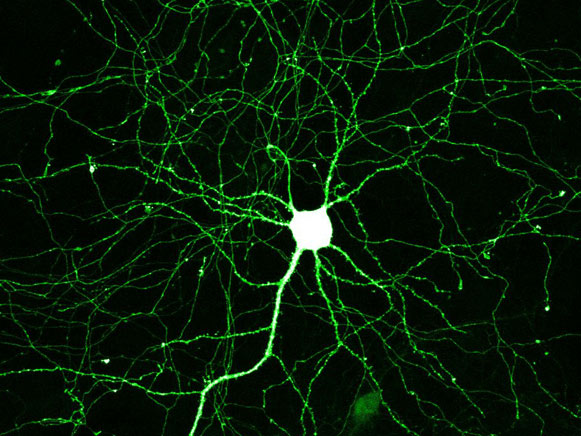
That, of course, is what drives Bill Knott up the wall about music, its power to inspire empathy:One of the great mysteries in human behavior was that a newborn child can look up at its parent, and the parent smiles, and the newborn will smile. Well, how does it know how to do that? How does it know by looking at an upturned mouth what muscles it needs to move to make its own mouth turn up? How does it know that it's going to produce the same effect? There's a whole complicated chain of neuroscientific puzzles attached to this question.
DB: So when you watch a performance, sports for example, you're not only watching somebody else do it. In a neurological kind of way, you're experiencing it.
DL:Yeah, exactly. And when you see a musician, especially if you're a musician yourself--
DB: —air guitar.
DL: Air guitar, right! And you can't turn it off—it's without your conscious awareness. So mirror neurons seem to have played a very important role in the evolution of the species because we can learn by watching, rather than having to actually figure it out step-by-step.
DB: Yeah, and not only that. You also empathize, you feel what they're feeling.
(that's why they invented music in the first place: to accompany murder)(Can you tell from those notes that Bill doesn't particularly like music?)
(that's the purpose of music: to facilitate killing) . . .
Labels: Bill Knott, Further Studies, music
Labels: music, Steve Kimock