Tuesday, April 06, 2010

Now that's a reading ...

I'd like to have been present for: Gary Snyder reading Robert Creeley, as well as his own work. The occasion? Snyder was the recipient of this year's Robert Creeley Award. According to Carly Cassano,
Snyder read some of Creeley’s poems, and even granted his interpretation of one. His reading of his own work was extraordinary to witness, as the genuine hippies around me rocked their heads in an odd caustic, yet welcome remembrance.
Radio guy that I am (and former, at least, genuine hippy), I do hope someone recorded the event.

~~~~~~~~~~~

A tip of the old hat to Ron Silliman for the link.

Labels: , ,

Saturday, January 16, 2010

News notes ...


I missed this when it first got posted, but on Thursday Ron Silliman reviewed Thomas Rain Crowe's new chapbook, The Blue Rose of Venice. What's more, he liked it, noting of it's short "Song of the Gondolier" -

Short bridges.
Narrow canals.
A single wooden paddle
from a black boat on dark water
the only sound
as
the gondolier begins to sing
eeoo, eeoo
into the evening
and the mouth of
a cellular phone.


that "it’s perfectly executed and I found myself reading it over & over, luxuriating in each moment."

Congratulations to Mr. Crowe!

(Other posts about Thomas and his work: here)

&&

Thomas joined me on Wordplay on January 3rd, and as soon as I get it edited (the station internet stream, which feeds the archiving system - or used to, now - dropped several times during the show, so it's incomplete and fragmentary), but I'll post it to the Wordplay Archive.

He read much of the Blue Rose, and friend and fellow poet Caleb Beissert, who joined us in the studio, read some translations of Neruda, and some of his own work as well .

&&

Speaking of Wordplay, thanks to the hard work of Greg Lyon, we've now gotten that archiving system actually, you know, archiving and uploading to the stream server, so each show will be available online for two weeks after its initial air date. I'll post it to the ibiblio archive after that.

Last week's show with poet Lucy Tobin is even now available from the Programming page, here, though it's in unedited form, which means you'll hear a few minutes of Diet Riot before Wordplay, and sundry other sonic artifacts that will disappear before it goes to ibiblio.

I'll be uploading this fall's and winter's shows to ibiblio anon.

&&

And the complete text of Robert Creeley's Collected Essays is now available online, as well, complete with index. Creeley's one of the indispensable guides to poetry in the late great 20th century, so it's wonderful to have his work available for free.
(a tip of the hat to Silliman's blog for the link)

~~~~~~~~~~~~~~~~~~~~~~~~~~~~~~~~
Photo: Thomas Rain Crowe and Caleb Beissert in the AshevilleFM studio for WordPlay.

Labels: , , , , ,

Wednesday, June 25, 2008

Robert Creeley this week on Wordplay


It's no secret that I see Robert Creeley one of the essential poets of the last fifty years. From early to late, his work opened new territories of mind and heart for poetry; I believe his fine ear and remarkable articulation of the rhythms of American speech insure that folks will still be reading his poems centuries from now.

In the 70s and 80s I recorded several Creeley readings on my trusty Uher 4400, but it recorded in a unique four track monaural format that makes the tapes playable only on a like machine, and mine needs repair. For the Fathers' Day show now up on the WPVM Archive page, then, I selected readings from among the many recordings at the ever-expanding Creeley collection at PennSound. The show begins with poems recorded at Black Mountain College in 1954 and poems from the same period (a few the very same poems) recorded at readings at Chicago's The Second City in 1961 and at Harvard in 1966. These were all clearly recorded on analogue tape, and transferred after the tapes had become somewhat degraded. I cleaned them up as best as I could for the show, but there's still some audible hiss; I also had to edit out the "fuck" in "Ballad of the Despairing Husband," since the FCC still considers that a word you can't say on the radio.

Most of the show, though, focuses on Creeley's middle and later work, from Pieces on. Perhaps that's just because I met him in 1968, the year Scribners brought out that collection, and so simply find in this work the voice I knew. From then till the end of his life he often worked in what became his long form, the serial suite. I've included "The Finger" and "Follow the Drinking Gourd" from a 1974 reading at Vermont's Goddard College; the complete "Histoire de Florida," from a 1995 Buffalo reading; "En Famille" from a 2000 reading at his Maine home, and "Wild Nights" from the same occasion; and two poems from a 2000 reading at the University of Pennsylvania, "Myself" and "Where Late the Sweet Bird Sang".

Did Bob ever write about music? He sometimes worked with musicians, of course, but I don't remember ever talking with him about music, and have no idea what he listened to day in and day out; I had to wing the soundscape. The show kicks off with a version of Miles Davis' "So What?" recorded at the Blackhawk in San Francisco (Miles was a big favorite at Black Mountain), and the other music featured in the program includes bits of "Stating Intention" from Peter Kater and R. Carlos Nakai's Migration; "So Long Michael" from Pierre Bensusan's Intuite; and Debussy's La Mer, performed by the Orcestra of Radio Luxembourg, Rolf Reinhardt conductor.

Head on over to WPVM and check it out.

~~~~~~~~~~~~~~~~~~~~~~~

The photo was taken by Joel Kuzai at Creeley's home in Providence, RI, in 2004.

~~~~~~~~~~~~~~~~~~~~~~~

Update 6/27/2008: Having just listened to the show, I feel I should apologize for the rough cross-fades between the music and Bob's readings. They're one of the hazards of doing the show live with balky equipment.

I'll do another show on Bob's work when my tapes are digitized, and try to make the transitions in that one less abrupt. Hopefully the station will have a couple of new CD players by then.

Labels: , , ,

Friday, October 19, 2007

Simic's Creeley

Much growling and gnashing of teeth to be heard recently in the areas of Poetryland that include the Buffalo Poetics list. The occasion? Charles Simic's dismissive review of the Robert Creeley's work, particularly the second volume of his Collected Poems, in the New York Review of Books.

The nut of what Simic has to say seems to me this (sorry, no link, as it's not free content):
American poetry is full of daybooks, poets who report everything they see and think and who keep doing the same thing for years, but they usually pay better attention to what goes on around them than he does, filling their poems with nicely observed details and memorable stories. Not Creeley. He doesn't gossip, doesn't confess secrets, doesn't have a rich imaginative life, doesn't write about nature or cities, and has nothing to say about history. His kind of poem, he informs us in his Paris Review interview, is done in one sitting, literally in the time it takes to type it or otherwise write it, usually without any process of revision. The aesthetic theory—and there is always a theory behind such reductive views—may sound persuasive, but it was foolish on Creeley's part to believe that it could ever validate a poem. If poetics were like cooking and one could write down a recipe for all of one's future poems, that would be true. However, great cooks rarely bother to consult cookbooks.

This may sound harsh, but reading the hundreds of poems that Creeley wrote after Pieces, I could not come to any other conclusion. The second volume, The Collected Poems of Robert Creeley, 1975–2005, which has poems written just before he died in 2005, is especially hard going. The better poems are rare and come after many pages of banal musings on aging, decline of his faculties, and death, in a language that is flat and thoroughly predictable.
That follows, of course, a complete misreading of Pieces, a pivotal volume in Creeley's career, in which he took apart the conventional poem and began the exploratory ventures of his later work - and opened vast new territories for American poetry in the process.

There'll certainly be more to say about all this, but I liked Lisa Janot's quick note:
As the good cats of Lisablog say, Charles Simic has his head up his ass. Cree rhymes with mastery.

Labels: , ,

Friday, March 23, 2007

Ed Dorn at the End


A couple of days ago Ron Silliman posted a review of a new selection of Ed Dorn's poetry, Way More West, just issued by Penguin. I haven't seen the book yet, but have to wonder if it included any of the work after Abhorrences, or if Ron skipped that section of it, given his comments. To wit:
So what we get, finally, is a rather sad case – of all the New Americans, Dorn’s later poems rank up there with Diane DiPrima’s Revolutionary Letters as the silliest when it comes to their actual political thinking. And like Pound’s politics, it undercuts the poetry, even more so because Dorn has sacrificed so much of his poetics for this muddle of pissed-off agitprop.
...
Among the wreckage of all that [presumably the "aesthetic reign", as Ron puts it, of the New American poets, in the wake of the Beatles, drugs, and Vietnam], there is no more tragic tale than that of Edward Dorn, who got political only to be revealed as incoherent. Way More West is an important book, precisely because it is such a sad & ultimately disappointing one.
Surely this overlooks the major work published in the last collection Dorn assembled, 1997's High West Rendezvous. The sections from Westward Haut and Languedoc Variorum included there are anything but "pissed-off agitprop", certainly not "flat", and the former, a dialogue between two four-legged citizens of the canine clan, marks a return to the high humor of Gunslinger, albeit with a darker (and sharper) satirical edge.

It's not that Ed Dorn wasn't difficult; he was a deliberate contrarian par excellence. There's much evidence that he was, in fact, as ornery a critter as we've had in American poetry since Ezra Pound himself checked out. I remember a mid-nineties conversation with Dorn's longtime friend and fellow Black Mountain College survivor Robert Creeley, in which Creeley said essentially, and dismissively, that Dorn just enjoyed saying whatever he felt like, to see what reaction he might stir up.

I, too, was disappointed in Abhorrences; it seemed to me then a book focussed on trivial concerns and crotchety pet peeves. But the man still had his chops, and the work of the mid to late nineties confirms that he was anything but a burnt-out coke-head at the end of his career, whatever the legend.

Originally published as a comment over at Silliman's Blog. Ron stirred several folks up with his post, and you'll find some other meaty comments there; well worth a look.

Labels: , , ,

Friday, March 09, 2007

Robert Creeley: Here and Now


A note: the desktop computer is down again, waiting on another mainboard, and much of the material I'd like to work into posts resides on its internal hard drives. While we wait, here's a piece I wrote on Robert Creeley in, I believe, 1978. I had just met him again, after some four or five years, at a program on Black Mountain College that was held at Warren Wilson College, located east of Asheville in Swannanoa, not too far from the original Black Mountain campus.

The article first appeared in the
Arts Journal, though I'll have to track down the volume and issue numbers.

[3/26/07 Update: Located a copy of the old
Arts Journal; the piece appeared in June, 1978, in Volume 3, Number 9, on page 30.]

A much later (though posted much earlier) consideration of Creeley and his work can be found in the archives here.

The photo, by Joel Kuzai, finds Creeley at home in Providence, RI.

~~~~~~~~~~~~~~~~~~~~~~~~~~~~~~~

First, some observations by Creeley concerning Black Mountain College (where, of course, he taught) which institution furnished posthumously the occasion for Warren Wilson's recent course, and his own visit there:

Black Mountain was more than a college. It was actually a collection of real people.

It wasn't trying to save the world. ... The one real dilemma of that reality was that the world wasn't finally there, although people lived and died, tried to commit suicide, put themselves in extraordinary intellectual and existential patterns, but somehow the world was absent. .. . There was an inexorable sense of practicing for the world ... One thing now in retrospect is that extraordinary rehearsals did take place - Black Mountain was an extraordinary rehearsal of possibilities.

That was its intellectual wonder.

The awful hostilities of the situation I won't rehearse for you, the fading grandeur of Black Mountain now shrunk to twenty-five persons, momently to shrink to twelve enrollment, the great intellectual authority of that situation. The nation waits, the world waits, the FBI waits, the State Board of Health awaits ... You didn't have to worry about who was watching you, because there they were.

. . . Have you ever had a college in which there were no students?. . . I remember being in this faculty meeting when the enrollment for the subsequent term was nil, there were no students and we had to say why we were going to continue as an educational facility.

. . . No students, no college.

I'm not at all here to celebrate the isolation of an educational pattern within a social autonomy or reality that has no use for it. My proposal is that insofar as we are human, and we are, insofar as we continue information variously collected, and we do, that sudden flashing moments ... exist for an instant in time, they inform the individuals that collect in that pattern, but the hierarchy of their information is paradoxically of no value, except to the persons present. In other words, there's no way of translating that information apart from the experience of it.... There 's no substitute for being there.

. . . But, you know, the authority of being here and now is that you are here and now.


Creeley's comments not only help locate Black Mountain as an event, but speak in terms of a particular context from the sense of world he has recently encountered also in his poetry. And that poetry is, for me, the stuff that matters.

His work has sometimes been misunderstood as merely solipsist. No doubt he is a person of considerable privacy, with a tenacious sense of the singular aspects of consciousness, but he is also so attentive to the exploratory turns language does take, to open speech to the world, of others, that such qualification seems strange indeed. As Charles Olson noted in a letter to Cid Corman, editor of the wonderful magazine Origin:

in the very interstices of sentences,
be can breathe and feel out all that

is worth beating, worth grabbing on
to, of another man.
Or, of himself, his own speech. Of that, his poems are evidence enough.

It is possible, though, to see in his work where such a term might have found some apparent ground. Early, in "The Dishonest Mailmen" (from The Whip, 1957, and subsequently For Love, 1962) for example, he writes, in definition of the sense of audience his work addressed, and the necessary task of imagination (I give the whole):

They are taking all my letters, and they
put them into a fire.
I see the flames, etc. But do not care, etc
They burn everything I have, or what little

I have. I don't care, etc.
The poem supreme, addressed to
emptiness - this is the courage
necessary. This is something
quite different.
The other poems in For Love likewise speak with a solitary authority. They are sometimes occasional (in a fortunate sense), or addressed to specific persons, sometimes folding in presumably actual words and voices of others in dialogue and counterpoint; but they don't really specify the world, human or otherwise, in which they find their occasions. So it remains mostly uncreated as such - except, of course, whatever the occasion, one does get the activity of the mind, its feelings and its explorations of the situation via its language, which encounters and reveals sudden, bright instants. Olson, in a review of the book, spoke of "a generalized symbiosis of [Creeley] and those he places in the forged landscape," which still seems an accurate account of the activity of the poems, and Creeley's stance then in relation to the world.

Creeley's work since has presented a continual unfolding into a larger sense of world, an envisioning of such in its particularity. The poems (to speak quickly) through Words, Pieces, and Daybook discover a wider address, and are immersed more and more deeply in a world of particular persons and occasions, to come to the always implicit other side of that initial singularity of address - i.e., the poem addressed to no one, but also to anyone.

When Olson dedicated the first volume of the Maximus Poems to Creeley as "the Figure of Outward," it was a move that sprang from actual intuition of the necessary direction of Creeley's push - as his own, as any man's, who is serious. The glyph that accompanies the dedication is the silhouette of, perhaps a man cast like an opening net into the sky, the net of the mind in its elemental air. (Or, a piece of perforated tin ceiling, in some literal sense.) Olson, I would hazard, saw Creeley's struggle and triumph in this outwardness, and Creeley's persistent activity in this pattern gave Olson himself (though he had already ventured into Maximus) the companion and foil he then needed to extend into the reaches of his own world. The Maximus Poems became Olson's plunge.

Creeley, having offered Olson a primary recognition of the possibilities of this activity has now, it seems, followed its trajectory into new dimensions of his own world. That world's locations (e.g. West Acton, Mass.) and persons are now actualized in fuller particularity of the occasions they present, present, than in previous work. And the gain, of course, gives a more actual presence of voice also, a new range of tone.

"Form is never more than the extension of content," Creeley long ago said - extension, tension, from Proto-Indo- European ten, a stretch, out against the resistance any motion meets to the equilibrium between the movement and the inertia it discovers in itself, and beyond itself. A dancer makes form from the limits of his/her human power against simple gravity, as well as from space. Accuracy and grace of movement return some strength to him, to the dance.

“One thing, for an artist at least," Creeley observed at Warren Wilson, "is to keep particular to the body state, to the information of being person."

The poems which move to address no person as such find a language that, in a concern to be equal to many situations of meaning, wakes resonance not previously heard in their spare words. I think of "The Plan is the Body" (of the Selected Poems), or a poem read at Warren Wilson, “After”:

I'll not write again
things a young man
thinks not the words
of that feeling.

There is no world
except felt, no
one there but
must be here also.

If that time was
echoing, a vindication
apparent, if flesh
and bone coincided –

let the body be.
See faces float
over the horizon let
the day end.
Or, the conclusion to one passage of another, “Later”, which turns to include the speaker in the double predicament, keeper and kept:
there's more always here

than just me, in this room
this attic, apartment
this house, this world
can 't escape.
"The descent beckons/as the ascent beckoned”; so W. C Williams discovered. It beckons one into the self and into the world, to make light of both. As Creeley says:
… now the wonder of life is

that it is at all
this sticky sentimental

warm enclosure,
feels place in the physical

with others,
lets mind wander

to wondering thought,
then lets go of itself,

finds a home
on earth.
For me, having met Creeley's work anew, there is new certainty that the reports of this voyage his work offers will be of real use, a delight, as I follow the consequences of a common morphology here, and now, and beyond, on the path home.

Labels: , , ,

Monday, February 26, 2007

Creeley reading, 1981

A clip from Ron Mann's documentary, Poetry in Motion (1981), via Jim Behrle.

Labels: , ,

Thursday, November 16, 2006

This Week: Celebrating Black Mountain Poets


Sometimes when I'm at Black Mountain's Camp Rockmont, now home to
The Lake Eden Arts Festival, and the former site of Black Mountain College, I wonder what it would have been like to hang out in the dining hall a half-century ago and listen in as the great Black Mountain poets read to one another and discussed each other's work. When Donald Allen placed the Black Mountain College poets first in The New American Poetry: 1945-1960, the great anthology that introduced a generation of experimental poets to a national audience, he might have done so based not just on the quality of their intellectual and formal adventures, but on a solid hunch about the significance their work would assume for the rest of the twentieth century. While they didn't achieve the momentary mass audiences a few of the Beat poets found, it'd be difficult to find another contemporary group of poets who did as much to shape the subsequent course of American writing. The energy of their work has rippled through the imaginations of the several generations and many schools of poets who've come down the road since, and ripples still.

This Friday, November 17th, at 6:00 PM, the Asheville Art Museum celebrates the legacy of these artists with a special evening of poetry that features local poets reading works of these groundbreaking Black Mountain College writers.

Language poet Ron Silliman recently noted on his weblog that when he met Black Mountain poet Robert Creeley in the mid-sixties, he was already the "dean" of American poetry. Ron caught some flack for that; Creeley was only in his mid-thirties, and his mentor, the visionary Charles Olson, was still living, though he had to that point little audience. I think, given that "dean" can imply the lofty heights of academic seniority, that Ron might have chosen a better word. But having met Creeley just a few years after, I can testify that the man had real mojo, genuine moxie, some serious virtu, as Horace might have said, and that by the time he was in his early forties, he had already discovered passes through language that settlers are still trooping through.

"Form is never more than the extension of content," he famously noted. Later he came to acknowledge that the statement was also true if the roles of content and form were reversed. Form embodies content, is the extension of the feeling that's the poem's initial premise. His insight into the nature of poetry, its relations to speech and mind, his consummate feel for rhythm, and his awareness of the fields of meaning within which the language of the poem must dance, make his work one of the enduring testaments of twentieth century poetry.

Charles Olson, certainly one of the most influential poets of his generation, had once befriended Ezra Pound (until he lost patience with Pound's reflexive anti-Semitism), and so provided a bridge back to the great Modernist poets who offered him, and his generation, an initial stance. When he came to Black Mountain College, he'd published a handful of poems and a short critical work on Melville; by the time he closed the College in 1957, he'd published, via Jonathan Williams' Jargon Press, the first two sections of his Maximus Poems, and completed the work that appeared as The Distances in 1960, displaying in both the gift for radical insight into history and the project of consciousness that makes his work of such value.

It was Olson, with his vision of new possibilities for poetry, and for life, who decisively shaped the minds and imaginations of the writers who gathered at the college in its final years. He brought Creeley to the college to teach, and later recruited Robert Duncan. Edward Dorn, John Wieners, and Jonathan Williams, to note just a few of the other significant poets who came through the college's refining fires, had ventured there as students. Other writers, Denise Levertov and Paul Blackburn, for instance, never visited the college, but were published by Creeley in the Black Mountain Review. The Review presented Creeley's and Olson's vision of useful modes of writing to the world, introduced the poets of Black Mountain to a larger community of like-minded writers, and became a meeting place for some of the most creative spirits of the era.

Robert Duncan went on from Black Mountain to become a leading figure in the San Francisco Poetry Renaissance of the nineteen sixties, producing a major body of work that included The Opening of the Field, Roots and Branches, and Bending the Bow, as well as the important late work published in the two collections of Ground Work, republished in one volume just last year. He also authored over a period of decades the amazing HD Book, not yet published in book form, but available at the moment on the web (it's a large .pdf file) in an unofficial electronic format that bears the imprint of the crucial, elusive Frontier Press. It began as a study of the work of Imagist poet Hilda Doolittle (who published as HD), but became a major work on poetic imagination. It's similar, in many ways, I think, to Coleridge's rambling, monumental Biographia Literaria, still one of the indispensable texts of the English Romantic period.

Speaking of that scepter'd isle ... Denise Levertov was English, born in Ilford, Essex, in 1927; she married an American, Mitch Goodman, after World War II, though, and moved to the States in 1948. Her Here and Now, published in 1956, and With Eyes at the Back of Our Heads, published three years later, established her as a major voice in the new poetry. She published more than twenty volumes of verse during her lifetime. Though she and her husband were personal friends of Creeley, her closest relationship with another Black Mountain writer was probably with Robert Duncan, with whom she had a long and illuminating, if sometimes contentious, correspondence, published in 2004.

Ed Dorn is perhaps one of the least well known of the Black Mountain poets, though there's hope that his Collected Poems, due out next year, will bring his work the larger attention it deserves. He was the most contrary of the contrarians who stood at the college, and ever afterwards, against the generalizing mass culture that seemed, seems, to strip individuals of their particularity, of the ability to stand grounded as creative, active participants in the polis of the world. His next-to-last collection, High West Rendezvous, contained sections from "Languedoc Variorum", a major late work that remains mostly in manuscript, which reveal it to be a poem of astonishing technical achievement that also challenges the pious orthodoxies of the history of heresy. It's an amazing, polyvocalic montage that mocks, on one level, the structures of contemporary media news presentation. He had his chops till the end. Unfortunately, it'd probably be next to impossible to perform, so Thomas Rain Crowe, charged with presenting the work of Dorn, will, I hear, read from another, earlier, masterpiece, his Gunslinger.

The reading will feature the works of these Black Mountain poets, and works, as well, by the poets gathered for the occasion: Sebastian Matthews, who organized the event, Thomas Rain Crowe, Jaye Bartell, Glenis Redmond, Keith Flynn, and myself. The reading is a part of the Museum's year-long celebration of Black Mountain College and its legacy in the arts.

Olson died in 1970, Duncan in 1988 , Levertov in 1997, Dorn in 1999, Creeley just last year, but on the 17th of November, the voices of their poems will return to Western North Carolina once again, and ring out.


~~~~~~~~~~~~~~~~~~~~~~~~~~~~~~~~~~

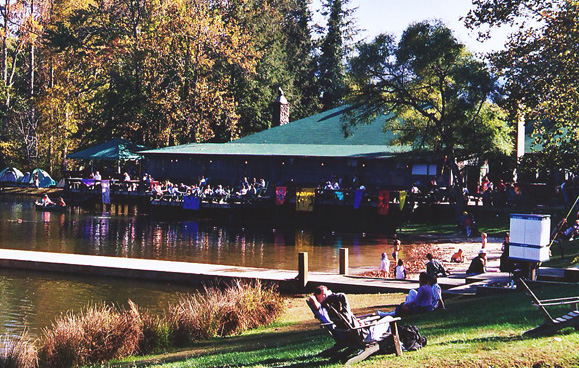
I took the photo of the Dining Hall on Lake Eden in 2003.
This post was published in different form in the November, 2006, issue of Rapid River. Trying to write about the Black Mountain poets in a thousand words or so ... Ha! Well, we'll have more than that to offer on Friday.

Labels: , , , , , , , , ,

Friday, October 13, 2006

A Creeley Appreciation


Ron Silliman has a nice appreciation of Robert Creeley's work up over at his blog today. Its ostensible occasion seems to be the publication of the second volume of Creeley's Collected Poems, but I notice it also coincides with the On Words conference in Buffalo devoted to Creeley and his work. I hope the snow storm that's hammered the Buffalo area doesn't slow things up too much. The news it had hit, though, made me remember those rough Buffalo winters - and smile as I look out my window at the still green leaves on the maple and hickory.

There is one small error in Ron's post, though: he says that On Earth, Bob's last book, was already "in production" at the University of California Press when he died. His wife, Penelope, actually found the poems in a folder on his desk in Marfa, Texas, after he'd passed on, and prepared them for publication. Just for the record.


The photo of Creeley is by Gloria Graham.

Labels: , ,

Tuesday, April 04, 2006

On Earth ...

Robert Creeley's last book, is now out. I haven't yet seen it, but Ron Silliman takes a look at it over at his blog. I'll be reading it over the next week and will be back to register my own responses. In the meantime ... read Ron - or Bob (that's a link to "Caves", a series of poems included in On Earth, for those not quite curious enough just to click the link), or Bob and Ron.

Had my computer not been down over the weekend, I would have noted the anniversary of Bob's death on Friday. Best to mark it this way, though, with a notice of his work.

Labels: ,

Wednesday, January 18, 2006

Something Quite Different: A Farewell for Robert Creeley


The news of Robert Creeley’s death arrived last March via an email from Michael Rumaker, forwarding the stark note he’d received from his friend Henry Ferrini: “Bob Creeley died this morning in Odessa, Texas with his wife and kids by his side.” Other email confirmed the sad truth. I was stunned; I hadn’t physically seen him for several years, but, notwithstanding his age (he was ((only, I want to say)) 78), by all accounts he had continued to be robust and active, and his last book (for now), If I Were Writing This…, published in 2003, had contained stunning, vital work. I’d kidded him via email on his previous birthday that I didn’t think he’d peaked yet (as though that would have meaning in the sport of language), and I’d looked forward to seeing him this summer, confident that we would continue our intermittent conversation of some thirty years. But then he was gone, brought down in Texas; it’s yet another thing that Texas must answer for. Driven by his puritan’s sense of duty to continue in spite of illness, he had pushed on until his body told him he could not, and stopped.

The plan is the body.
Who can read it.

(from “The Plan Is The Body”, Selected Poems [1976])


Less than a year later, it’s not time yet for me to assess his long career or his work in all its complexity, in all its various detail. It does seem possible, even necessary, though, to sketch some of the directions in his poetry. He was one of a handful of poets who reinvented American poetry at the middle of the last century, so it’s essential, if we want to understand where we are as writers and readers of poetry, to have some sense of what he did. His early poems, with their echoes of troubadour lyric, Elizabethan in their sense of nuance and intellectual grace, were already unique. And then he got really adventurous. He could explore the meaning of a word in various conditions with the best of his peers, and as well as the poets he considered his masters, like Olson and Williams, but he also wrote with heart. Though I can’t find the reference now (perhaps I’ve imagined it, though I’m not yet convinced), I remember his Black Mountain College fellow Ed Dorn writing of Bob’s early work as the “consummate articulation of feeling”. Not feeling in some sentimental sense, some recapitulation of sanctioned expression, but of feeling as felt, as actual, as practiced, with rare honesty. Here’s something I’ve always liked from For Love, published in 1962, his first book to have publication of more than a few hundred copies, though he’d been writing since 1945. It’s called “The Name”, and is addressed to his daughter:

Be natural, wise
as you can be,
my daughter,


Let my name
be in you flesh
I gave you
in the act of


loving your mother,
all your days,
her ways,
the woman in you


brought for
sensuality’s measure,
no other,
there was no thought


of it but such
pleasure all women
must be in her,
as you. But not wiser,


not more of nature
than her hair,
the eyes
she gives you.


There will not be another
woman such as you
are. Remember
your mother,


the way you came,
the days of waiting.
Be natural,
daughter, wise


as you can be,
all my daughters,
be women
for men


when that time comes.
Let the rhetoric
stay with me
your father. Let


me talk about it,
saving you such
vicious self-
exposure, let you


pass it on
in you. I cannot
be more than the man
who watches.

There were grittier poems also, of course, given that the years of For Love’s composition included the end of his first marriage - poems like the trenchant “Ballad of the Despairing Husband”, which readers should forthwith find for themselves, given its length. Here are its opening stanzas:

My wife and I lived all alone
contention was our only bone.
I fought with her, she fought with me,
and things went on right merrily.


But now I live here by myself
with hardly a damn thing on the shelf,
and pass my days with little cheer
since I have parted from my dear.


Oh come home soon, I write to her.
Go fuck yourself, is her answer.
Now what is that for Christian word?
I hope she feeds on dried goose turd.

If you had any immediate experience of the fifties, you know that was wild, far out, and totally rad for the era.

His next book, Words, moved deeper in its exploration of the significance of person, the phenomenology of self, and asked more explicitly what it meant to be an I, a creature of apparently singular identity, as in “The Pattern”:

As soon as
I speak, I
speaks. It

wants to
be free but
impassive lies

in the direction
of its
words. Let

x equal x, x
also
equals x. I

speak to
hear myself
speak? I

had not thought
that some-
thing had such


undone. It
was an idea
of mine.


With Pieces, published in 1969, he went further than even Williams had to demolish the poem as a received form – or “deconstruct” it, as we might now say. He opened up poetic form, dismantled it, and explored the intersections of poetry with other modes of speech. It’s a sustained meditation on the act of thinking, of acting otherwise, and the mystery of perspective – just for starters! Here are a few of the initial pieces:


No one
there. Everyone
here.
….

The Family


Father
and mother
and sister
and sister
and sister.


Here we are.
There are five
ways to say this.
….

Kate’s


If I were you
and you were me
I bet you’d
do it too.

Merce Cunningham came in his choreography to ponder that the stage as defined by traditional proscenium had “front” and “back”, and realized that in fact wherever the dancer moved was the front of his/her stage, the place of his or her act, and so found it necessary to redefine the presentation of dance. In a similar way Creeley set out to build a reality for the poem that recognized as “front” the location of the voice which spoke it, and the locations at their own fronts of other selves and proximate figures otherwise involved.

There are five/ways to say this.


In another piece of these Pieces, one found in “Mazatlan: Sea”, there’s this:


Want to get the sense of “I” into Zukofsky’s “eye” – a locus of experience, not a presumption of expected value.

In a poem of the social world, this concern could manifest as it does in the first sections of “The Friends”:

I want to help you
by understanding what
you want me to
by saying so.
.
I listen. I had
an ego once upon
a time – I do still,
for you listen to me.

Let’s be very still.
Do you hear? Hear
what, I will say when-
ever you ask me to listen.

While such use of dialogue with ambiguous speakers was adumbrated in several poems - “I Know a Man”, for example – of For Love, Pieces explores the territory more deliberately, with more verve, and goes further.

Also appearing explicitly in Pieces was another concern that Creeley articulated in various ways through his subsequent work: the role of language in creating the world we know. As he notes in “Zero”, the last of a series named “Numbers”;

There is no trick to reality –
a mind
makes it, any
mind.

Or the same series, in “Two”:

This point of so-called
consciousness is forever
a word making up
this world of more
or less than it is.

In his readings during the 1990s, Bob often referred to the story told by the English philosopher Bertrand Russell concerning a conversation he, Russell, had had with Ludwig Wittgenstein, who was then attending his seminars and classes. “He thinks nothing empirical is knowable - I asked him to admit that there was not a rhinoceros in the room, but he wouldn't." Russell, so the story goes, then set about searching the room, lifting the skirts of sofas and chairs, in an effort to prove to Wittgenstein that indeed there was no rhinoceros in the room, ignoring entirely the linguistic fact that there was, indeed, a rhinoceros in the room, and he had created it.

Pieces embodied a reconstruction of form and a reconsideration poetic voice that sent tremors through the world of writing that ripple still, that raised questions those of us concerned with how thought works, and how language limns the world, still address. It became evidence in itself of a transformation Bob marks in another of its poems:

Diction

The grand time when the word
were fit for human allegation,


and imagination of small, local
containments, and the lids fit.

What was the wind blew through it,
a veritable bonfire like they say –

and did say, in hostile, little voices:
“It’s changed, it’s not the same!”

Not, certainly, that Bob was working alone. Bob always thought of himself, as he often said, as part of a fellowship, a company of persons of like mind. Olson, his mentor, whose work he edited and for whose recognition he was always a determined advocate, had certainly helped clear the conceptual ground and offered a model of practice. Fellow Black Mountain poets Ed Dorn, Denise Levertov, and Robert Duncan, San Francisco’s Jack Spicer and Robin Blaser, and, of course, many of the Beats worked in parallel directions. No one, though, to my eye, got closer to the mind’s bone.

After Pieces

Creeley was always prolific, whatever might be transpiring in his personal life, and wherever life might find him engaged. Over the next three and a half decades he published nine collections of poetry (not counting chapbooks and very small press editions); three additional volumes that collected work between given dates, including the Collected Poems 1945-1975 of 1982; and two Selected Poems, the second of which, published in 1991, contained his own selection of his work. In addition to the poetry, he published a novel, The Island, in 1963, a book of stories, The Gold Diggers, in 1965; these were included in the Collected Prose of 1984, which also included Mable: A Story, A Daybook, and Presences. His essays and critical pieces were first collected in A Quick Graph, published in 1970; the contents of that volume were included, with much other material, in The Collected Essays of 1989. He loved to collaborate with visual artists, and did so frequently, right through the “En Famille”, “Drawn & Quartered” and “Clemente’s Images” poems which appear in If I Were Writing This …. It’s an amazing body of work, however one measures it. The great critic and literary historian Hugh Kenner once noted that Creeley probably had no sense of which of his poems were his “best” works, because he didn’t think in such simple terms of value. He was assuredly right. In the preface to the early collection The Charm, Bob noted, citing Robert Duncan for the observation, that “poetry is not some ultimate preserve for the most rarefied and articulate of human utterances, but has a place for all speech and all occasions thereof. … Selfishly enough, I can often discover myself [in these poems] in ways I can now enjoy having been – no matter they were ‘good’ or ‘bad’.” In a career that spanned sixty years, Creeley certainly produced some poems that were “better” than others, especially if one takes that to mean that some are more immediately useful or accessible than others, or open larger worlds of more apparent significance. But as with the work of any major poet (and it’s clear that Bob was that), even the small, apparently lesser pieces can offer startling insights and bring us into moments of recognition, instances of the jewel mind caught in the net of its own facets, refracted with riveting clarity.

Over time he developed ways to address his persistent concerns that focused less on the formal structure of the poem as extensive activity of mind, and more on the larger issues (as he came to see them) of language and world, and of the experience we have of time, and time’s losses. The poems in If I Were Writing This …, the last book he published during his lifetime, appear to be, well, conventional. They evidence intensity, though, that is anything but ordinary. They distill a lifetime of learning about the task of being human, of being (in) a body that breaks down, as consciousness deepens and goes on. Here’s the first poem in the book:


The Way

Somewhere in all the time that’s passed
was a thing in mind became the evidence,
the pleasure even in fact of being lost
so quickly, simply that what it was could never last.


Only knowing was measure of what one could
make hold together for that moment’s recognition,
or else the world washed over like a flood
of meager useless truths, of hostile incoherence.


Too late to know that knowing was its own reward
and that wisdom had at best a transient credit.
Whatever one did or didn’t do was what one could.
Better at last believe than think to question?


There wasn’t choice if one had seen the light,
not of belief but of that soft, blue-glowing fusion
seemed to appear or disappear with thought,
a minute magnesium flash, a firefly’s illusion.


Best wonder at mind and let that flickering ambience
of wondering be the determining way you follow,
which leads itself from day to day into tomorrow,
finds all it ever finds is there by chance.

It’s aptly named, as Bob’s testament, his summary of his own Tao. I’ve read that poem many times now, and it gets richer and richer. It’s writing that matters, something to take with us down the road. And that’s what counts. The book’s other writing of equally sustained insight and engagement have made it, for me, an essential text.

To the end, Creeley wrote, as he had determined to early on,


The poem supreme, addressed to

emptiness ‑ this is the courage
necessary. This is something
quite different
From “The Dishonest Mailmen”, first published in The Whip, collected in For Love.


There’s not yet much to read about Creeley. There is his own “Autobiography”, included in Tom Clark’s otherwise indispensable Robert Creeley and the Genius of the American Common Place, still in print. There’s also a wonderful portrait of Bob at Black Mountain College, one of the major intersections in his life, in Michael Rumaker’s Black Mountain Days; it also features a richly resonant take on Charles Olson, Bob’s mentor and co-conspirator, and one of Rumaker’s teachers as well. Eckbert Faas’s disappointing Robert Creeley (2001) barely veils its adversarial approach, and covers in real depth only the first phase of Creeley’s career as poet. I suppose all of us who have married and divorced can expect the testimony of our former spouses to be featured in any biographies that it might occur to someone to write, but Ann MacKinnon’s memoir of her marriage to Bob is nearly the only thing included in Faas’ book that’s of substantial value – and it doesn’t reveal Creeley in the way Faas seems to think it does. Oh, well.

So read Bob instead. Most of his work is still in print, and there’s more to come: the University of California Press will issue On Earth: Last Poems and an Essay in April. Later in the year, Bob’s 1982 Collected Poems will be reprinted with a new cover as Volume 1 of the new Collected Poems, and a new Volume 2 will include all the work from 1975-2005.

Goodbye, Bob - and, as you liked to say, Onward!

Update: an earlier article on Creeley, written in 1978, is now posted here. On Earth is now available here, and the second volume of the Collected Poems here.

(An earlier version of this text appeared in last fall’s Asheville Poetry Review. Thanks to Keith Flynn for permission to republish it here. Thanks to Jonathan Williams and the Black Mountain College Museum + Art Center for permission to use Jonathan’s photograph, “Portrait of the Artist as a Spanish Assassin”, taken at Black Mountain College.)

Labels: , ,

Sunday, January 01, 2006

Happy New Year ...

...if your calendar works that way. It's a beautiful day here in the Smokies, clear, cloudless and warm; the thermometer on the porch says it's seventy, and that feels right. More of this would be just fine.

Ron Silliman has a nice post up on some passings during the last year, and closes it by discussing Robert Creeley, who passed away last March:
I'm going to give the last word here this year to Robert Creeley. He was, to my mind, easily the finest poet of my parents'’ generation & truly the dean of American poets at least from the death of Williams until his own in March. He was also one of the most generous of human beings, and that rarest thing, somebody who wanted truly to learn from younger poets, whether they were my age or just starting out in their early twenties. Bob was active as a poet for over half a century, and that we got to have him, his work, his presence & his example for so very long was a great gift. The following is a text that Creeley wrote for a class given by Larry Fagin in 1987 or '’88 at a junior highschool. Tho he was a guest in the situation, Bob took it upon himself to complete the same assignment given to students:
WHAT I KNOW ABOUT MYSELF

I know I have been alive for over sixty years.

I know some people love me and some don'’t.

I know I am like all other people because I have the same physical
life - as hens are like hens, dogs like dogs.


I know I don'’t know a lot that other people may well know more
about but I'’ve got to trust them to help me - as I need it, and vice versa.


I know what I am, a human, is more than what I can simply think or feel.

I know I love dogs, water, my family, friends, walking the streets when things feel easy.


I know this is the one life I'’ll get - and it's enough.


ONWARD!
Creeley was indeed a remarkable poet, and I'll soon be posting here a piece on his work that I did for the new Asheville Poetry Review.


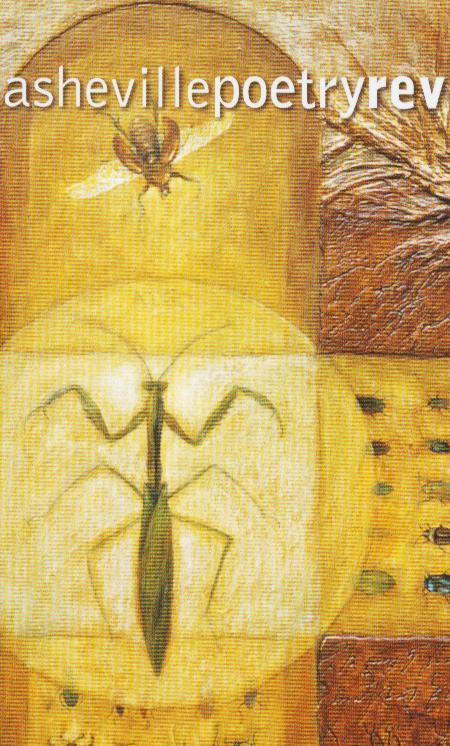
This issue of the Review is a fine one, and holds within its covers lots of vital new work - and a little vital old work as well. There's Thomas Rain Crowe's last interview with Philip Lamantia, the "shaman of the Surreal", as Crowe says, and then Andre Breton's "Manifesto of Surrealism", which first appeared in 1924. There's also new work by a slew of poets of various persuasions (fifty-seven by a quick count), including Jonathan Greene, Sebastian Matthews, and Joseph Bathanti, just to name a few whose work I've already enjoyed; Greene's memoir of his friendship with Cid Corman, who passed away in 2004, and some poems by Corman himself - who left, by some accounts, 80,000 unpublished poems at his death; and Rob Neufeld's celebration of Jonathan Williams' major selection Jubilant Thicket. Joe Napora also takes a good look at Thomas Crowe's and Nan Watkins' wonderful translation of Yvan and Claire Goll's 10,000 Dawns, a book that richly deserves celebration as well.

Speaking of Thicket, word last month was that it's been a substantial success, and soon heads into a second printing, a real rarity for a book of poems in these times. Congratulations to Jonathan.

You can find the Review at Malaprops, or order it the old way via mail. It's certainly worth tracking down.

Labels: , , ,

Thursday, September 01, 2005

Posts in the Permanent Collection

Two posts archived here deal head-on with Robert Creeley's work:
Something Quite Different: A Farewell for Robert Creeley (published 2006), and
Robert Creeley: Here and Now (first published in 1979); they're the best place to start if you're interested in Creeley (or at least my engagement with his work).

In addition, a search of NatureS on "Robert Creeley" will turn up many other mentions of him, often in the context of discussions of Buffalo in the late nineteen sixties and early nineteen seventies, or considerations of other Black Mountain College poets.

Jonathan Williams was one of those Black Mountain College poets. He was born in Asheville, and lived much of his life about an hour and a half west of here, at Scaly Mountain. Posts on Jonathan include this appreciation of his work published just after his death in 2008; this post previews a showing of some of his photographic work; and another post provides production notes for the Wordplay show featuring Jonathan reading his work, live and in person, at Sylva's City Lights Books in 2005.

Articles on Thomas Meyer's 2006 translation of the daode jing can be found here, here, and here. Production notes for the Wordplay show that featured Tom reading his translation, as well as a selection of earlier work, will be found here, and the notes for the program featuring his reading of Kintsugi and other poems are here.

A Note on Jack Clarke discusses Charles Olson's Buffalo friend and fellow poet, who founded the Institute of Further Studies. There's look at some of Novalis' fragments here; the great German Romantic was among authors included in the Institute's unique Curriculum of the Soul.

I've discussed Bill Knott's poetry, as well as his aversion to music, several times - here and here and here, for instance.

Visual artist Joyce Blunk is featured in an article on her piece "Crown Conch"; there's also an interview with Joyce.

Guitarist Steve Kimock, a master of musical improvisation, is the subject of several posts, including this one and this one.

Wait, there's still more! Posts, for example, on Baby Beat Thomas Rain Crowe, and his group The Boatrockers, and poets Fred Chappell and Jim Applewhite.

Other possible attractions: a post on poetry and computers; another farewell, this one to west-coast surrealist poet Ken Wainio.

Over on Eden Hall, there are older posts about happenings at the Black Mountain College Museum + Arts Center, including one on Hazel Larsen Archer and the book about her work the Black Mountain College Museum + Arts Center published in 2006. There are several of her photos here.

Enjoy.

~~~~~~~~~~~~~~~~~~~~~~~~~

Updated 2/19/2009 to include additional posts.

Labels: , , , , , , , , , ,